Food · Sushi
How to Eat Sushi in Tokyo: The Beginner's Guide
You don't need to study before eating sushi in Tokyo — the anxiety travellers feel about it is mostly imported myth. A few minutes here, though, and you'll order with confidence, sidestep the one or two faux-pas locals actually notice, and know exactly where to go for your budget. Here's the whole picture: the types, the etiquette that matters, and the four ways Tokyo eats sushi.
Sushi has a reputation abroad as something to be nervous about — secret rules, a stern master, a risk of embarrassing yourself. Forget almost all of that. In Tokyo, sushi is everyday food eaten by toddlers and pensioners alike, and the settings range from a ¥120 conveyor plate to a hushed counter. Get a few basics, and the whole city opens up.
The types you'll meet
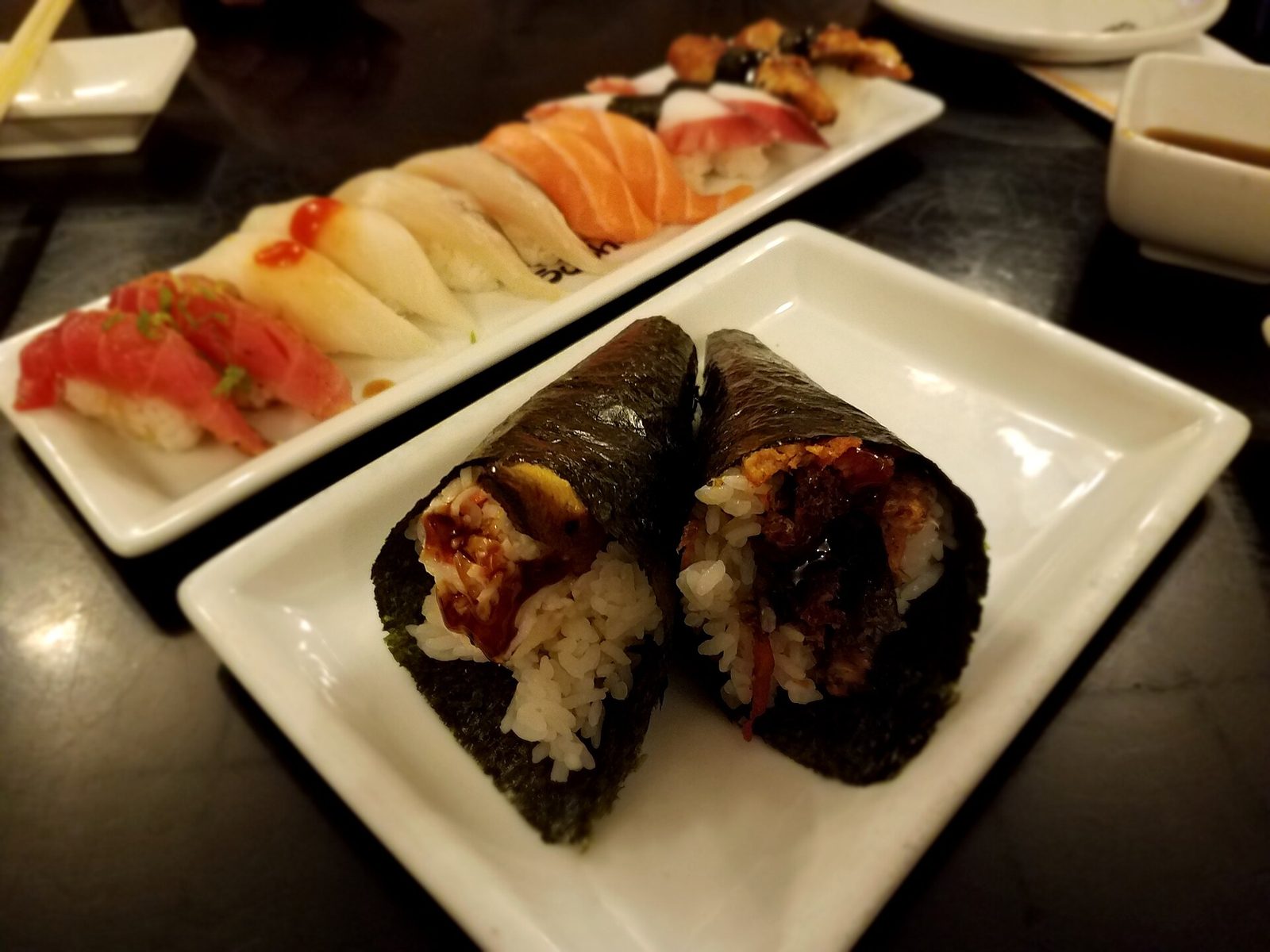
- Nigiri (握り) — the classic: a hand-pressed finger of rice with a slice of fish on top. The heart of sushi.
- Maki (巻き) — rolls wrapped in seaweed (nori) and sliced; includes thin hosomaki and chunky filled rolls.
- Gunkan (軍艦) — "battleship": a rice oval wrapped in a nori band to hold loose toppings like salmon roe (ikura) or sea urchin (uni).
- Temaki (手巻き) — a hand-rolled cone of nori, rice and filling.
- Sashimi (刺身) — just the sliced raw fish, no rice. Technically not sushi, but always nearby.
- Chirashi (ちらし) — a bowl of sushi rice scattered with assorted fish; great value at lunch.
How to actually eat it (the rules that matter)
- Hands or chopsticks — both are fine for nigiri. Many regulars use fingers; nobody minds either way.
- Dip fish-side, not rice-side, into the soy sauce. Rice-down soaks up too much, falls apart, and reads as rookie. A light touch is the whole technique.
- One piece, one bite if you can — nigiri is built to be eaten whole.
- Gari (pickled ginger) is a palate cleanser between pieces, not a topping to pile on.
- Go easy on soy and wasabi. At a counter the chef has already put the right amount of wasabi inside; at chains it's a tube on the table.
- Don't rub your chopsticks together — at any decent place it implies the chopsticks are cheap and is mildly rude. Honestly, at a ¥120 chain nobody's watching.
A quick topping glossary
- Maguro (まぐろ) — tuna. Chutoro / Otoro — medium- and high-fat tuna belly (richer, pricier).
- Sāmon (サーモン) — salmon, the universal crowd-pleaser; aburi means lightly seared.
- Ebi (えび) — shrimp. Tamago (玉子) — sweet egg omelette, a great safe pick.
- Unagi (うなぎ) — grilled freshwater eel, sweet-savoury, cooked (not raw).
- Ikura (いくら) — salmon roe. Uni (うに) — sea urchin, creamy and an acquired love.
- Hotate (帆立) — scallop. Negitoro (ねぎとろ) — minced fatty tuna with spring onion, beloved by everyone.
The four ways Tokyo eats sushi — pick your setting
This is the part that actually decides your night. Tokyo gives you four very different doors, and the price gap between them is enormous:
- Conveyor-belt sushi (kaiten-zushi) — the everyday default. Touch-panel ordering, ¥1,000–2,500, the easiest entry point. Start here if you're unsure.
- Standing sushi (tachigui) — chef-made, eaten standing, fast and cheap. A very local move.
- Sushi Zanmai — a reliable sit-down chain with real chefs and honest prices, many branches open 24 hours. The comfortable middle.
- Toyosu Market — dawn pilgrimage for the freshest omakase breakfast beside the great fish market. The splurge-with-a-story.
If you remember only three things
- Dip fish-side, eat in one bite, use gari between pieces — that's 90% of the etiquette.
- Sushi spans ¥120 plates to ¥30,000 counters — the setting, not the fish, is the big price lever.
- If in doubt, start at a conveyor-belt chain — cheap, photo-menus, zero pressure.
Make your Tokyo food days easier
- A phone with data (eSIM). To switch a chain's app to English, take a remote queue ticket, and map the nearest branch, you'll want to be online from the moment you land. A travel eSIM for Japan activates before arrival — no airport queue.
- Want a local to lead the way? A small-group Tokyo food tour takes you past the famous names to the everyday spots most visitors never find.
These are affiliate links: they cost you nothing extra, and a small commission helps keep these guides free.
The local bottom line
The "rules" of sushi are far gentler than the internet makes them sound, and the city rewards anyone willing to walk in. Learn the four settings, dip lightly, and order what you actually like — salmon and egg are not "beginner" choices, they're just good. Do that and you'll eat sushi in Tokyo the way locals do: often, cheaply, and without a shred of anxiety.
Helped you eat well for less? If these guides are useful, a small tip keeps them coming.
☕ Buy me a coffeeImage credit: {c} (resized).
Not sure where to eat your first sushi?
Ask me directly — I reply in public so the next traveller benefits too: