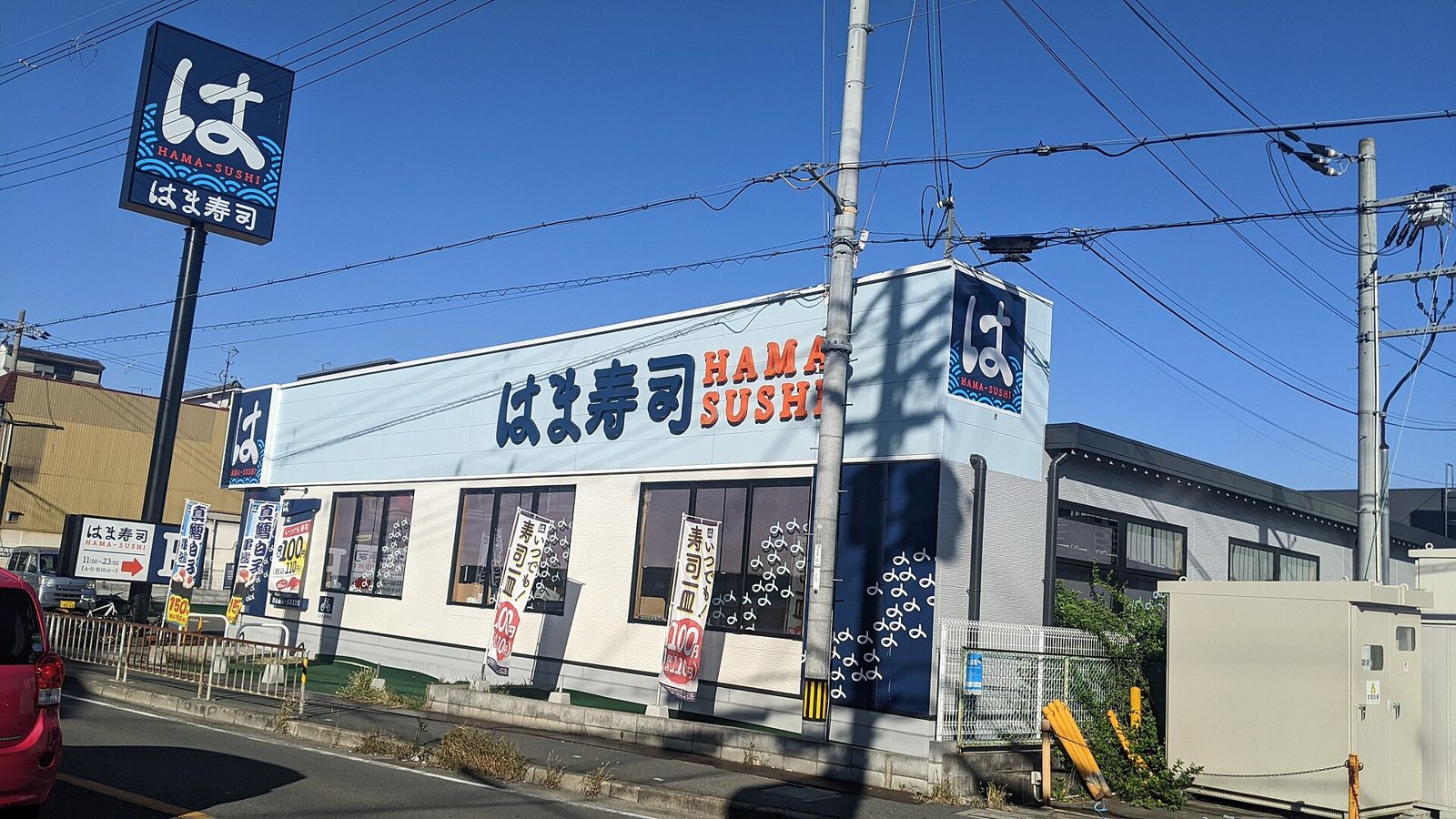
Food · Sushi
Hama Sushi: The Cheapest Sushi Chain
When locals want sushi at rock-bottom prices, Hama Sushi is the answer. Part of the same group as the gyudon giant Sukiya, it runs some of the lowest plate prices in Japan, frequent weekday discounts, and a wall of free flavoured soy sauces at every table. No frills, maximum value — here's how to make the most of it.
Every category has a value king, and among Tokyo's conveyor-belt sushi chains it's Hama Sushi (はま寿司). Owned by Zensho — the same group behind the gyudon chain Sukiya — Hama competes on one thing above all: price. If your goal is to fill up on decent sushi for the least money possible, this is your shop.
What makes Hama the value pick
What it is: a big national conveyor-belt chain positioned squarely on price, backed by the scale of the Zensho/Sukiya group. Expect weekday discounts that push plates even lower, and a focus on volume and value over frills.
The trade-off is honest: you're not here for the rarest cuts or the fanciest seasonal fish. You're here because a family can eat its fill of perfectly good salmon, tuna and egg for less than almost anywhere else in the city.
The free flavoured soy sauces
Hama's fun quirk: each table has a lineup of different soy sauces to try — regular, plus regional and flavoured varieties. It's a small, free way to make a cheap meal feel like a tasting, and a genuinely nice touch that sets Hama apart.
How to order & what to get
- Order on the English panel; plates arrive on the express lane. Same flow as the other chains.
- Lean on the standards — salmon, tuna, negitoro, shrimp, egg — where Hama's value shines hardest.
- Try the soy flight across a few plates; it's free and it's the Hama experience.
- Watch for weekday deals posted in store and in the app.
The honest local verdict
- Go if price is the priority and you want to eat well for as little as possible — students, families and budget travellers, this is your chain.
- Pick another chain if you want the best overall quality (Sushiro) or an experience for the kids (Kura). Hama is about the bill, and it wins that contest.
Practical information
Hama Sushi (はま寿司)
- Where: branches across Tokyo and nationwide; search "はま寿司" plus your area.
- Budget: plates often around ¥110 on weekdays; a meal can be under ¥1,500 a head.
- Skip the wait: reserve in the Hama Sushi app at busy times.
- Paying: cash, cards, IC cards and QR generally accepted. (See our Suica & PASMO guide.)
If you remember only three things
- Hama is the cheapest of the big chains — the value king, especially on weekdays.
- Try the free flavoured soy sauces — a small, fun touch that's pure Hama.
- Great for budgets and families; everyday-grade fish, unbeatable bill.
Make your Tokyo food days easier
- A phone with data (eSIM). To switch a chain's app to English, take a remote queue ticket, and map the nearest branch, you'll want to be online from the moment you land. A travel eSIM for Japan activates before arrival — no airport queue.
- Want a local to lead the way? A small-group Tokyo food tour takes you past the famous names to the everyday spots most visitors never find.
These are affiliate links: they cost you nothing extra, and a small commission helps keep these guides free.
The local bottom line
Hama Sushi isn't pretending to be the best sushi in Tokyo — it's trying to be the best value, and it succeeds. When the goal is to feed everyone well without watching the plate count nervously, Hama is the relaxed, cheerful answer. Grab a few soy sauces, pile up the salmon, and enjoy how little it costs.
Helped you eat well for less? If these guides are useful, a small tip keeps them coming.
☕ Buy me a coffeeImage credit: {c} (resized).
Eating Tokyo on a tight budget?
Ask me directly — I reply in public so the next traveller benefits too: