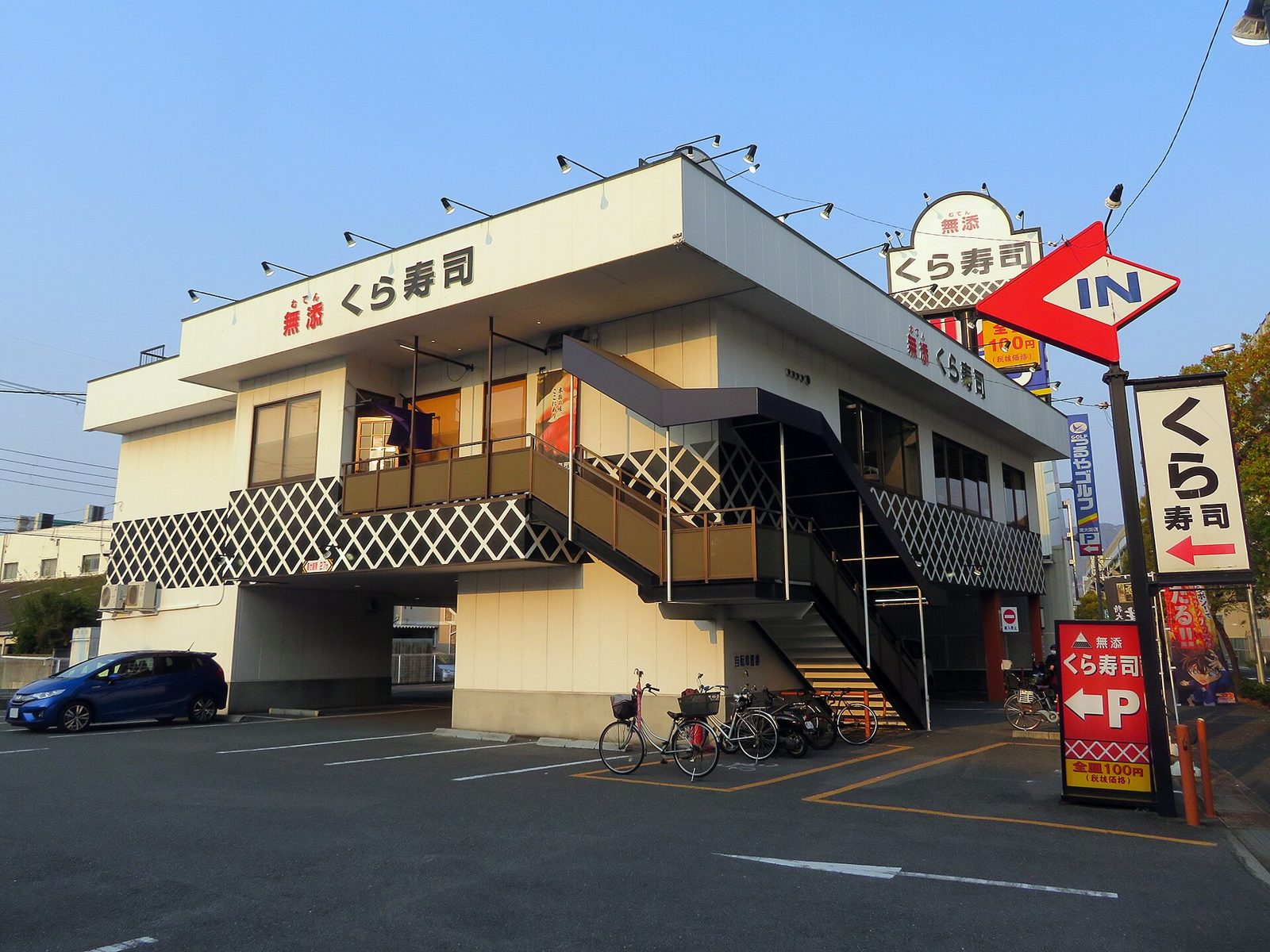
Food · Sushi
Kura Sushi: The Fun, Additive-Free Chain
Kura Sushi turns lunch into a game: drop five empty plates into the slot at your table and a screen plays "Bikkura-Pon" for a small capsule-toy prize. Kids are instantly hooked, first-timers love the novelty, and behind the fun is a serious promise — no artificial additives, colourings or preservatives. Here's how it works.
If Sushiro is the reliable default among Tokyo's conveyor-belt chains, Kura Sushi (くら寿司, Kurazushi) is the fun one. It's a major national chain with two signatures: a built-in game that rewards you for eating, and an unusually strong "nothing artificial" food philosophy.
The Bikkura-Pon game
Here's the hook that makes Kura unforgettable for families. Every table has a plate-return slot. Finished a plate? Post it into the slot. For every five plates you return, the screen plays a quick "Bikkura-Pon" animation, and now and then you win a small capsule toy that drops out beside you. Kids will happily out-eat the adults to chase it — and it doubles as Kura's automatic plate-counting system, so your bill is tallied as you go.
The "nothing artificial" promise
What it is: a major conveyor-belt chain that markets a strict no artificial additives, colourings, preservatives or chemical seasonings policy across its food. It's a genuine point of difference, and a reassuring one if you're feeding children.
How to order & what to get
- Order on the panel (switch to English), and plates arrive on the express lane. Take from the belt too if you like — just never return a plate to the belt.
- Post empties into the slot to count your bill and trigger the game.
- What to get: the standards (salmon, tuna, negitoro, egg) plus Kura's rotating specials; the chain also does ramen, sides and a big dessert range — good for mixed groups.
The honest local verdict
- Go if you're with kids, or you want the most entertaining conveyor-belt experience, or the additive-free angle matters to you. It's a joy with a family.
- Pick another chain if you want pure lowest-price (Hama Sushi) or the all-round quality benchmark (Sushiro). Quality is solid at Kura, but the draw is the experience.
Practical information
Kura Sushi (くら寿司)
- Where: branches across Tokyo and nationwide; search "くら寿司" plus your area.
- Budget: plates from ~¥120; a meal usually ¥1,200–2,500 a head.
- Skip the wait: reserve via the Kura app at busy times.
- Paying: cash, cards, IC cards and QR generally accepted. (See our Suica & PASMO guide.)
If you remember only three things
- Post five plates, win a prize — Bikkura-Pon is the whole personality, and it counts your bill.
- No artificial additives — Kura's genuine point of difference, reassuring for families.
- Best for kids and first-timers — go for the experience as much as the sushi.
Make your Tokyo food days easier
- A phone with data (eSIM). To switch a chain's app to English, take a remote queue ticket, and map the nearest branch, you'll want to be online from the moment you land. A travel eSIM for Japan activates before arrival — no airport queue.
- Want a local to lead the way? A small-group Tokyo food tour takes you past the famous names to the everyday spots most visitors never find.
These are affiliate links: they cost you nothing extra, and a small commission helps keep these guides free.
The local bottom line
Kura Sushi understands that a meal out with kids is about more than food, and it leans into that without cutting corners on what's on the plate. Come for the prize-dropping game, stay for the additive-free reassurance, and let the little ones eat their way to a capsule toy. It's the most fun you can have at ¥120 a plate.
Helped you eat well for less? If these guides are useful, a small tip keeps them coming.
☕ Buy me a coffeeImage credit: {c} (resized).
Travelling with kids and wondering if Kura's worth it?
Ask me directly — I reply in public so the next traveller benefits too: