Food · Budget
Eat Tokyo Like a Local: Great Meals Under ¥1,000
You do not need a big budget to eat well in Tokyo. You need to know where the locals go.
Most first-time visitors end up eating near the famous sights — and that is exactly where Tokyo feels expensive. A "tourist-street" lunch in Shibuya or Asakusa can run ¥2,000–¥3,000 before you notice. Meanwhile, the people who actually live and work here are eating better, faster, and for under ¥1,000 — roughly $6–7 depending on the exchange rate — every single day.
I commute into central Tokyo from the suburbs. I eat here on workdays, weekends, before trains and after late nights. This is not a "10 hidden gems" list scraped from somewhere else. It is the everyday map: the categories of cheap, genuinely good food that Tokyo runs on, with honest price ranges so you know what "normal" looks like before you order.
The one rule: walk one street back
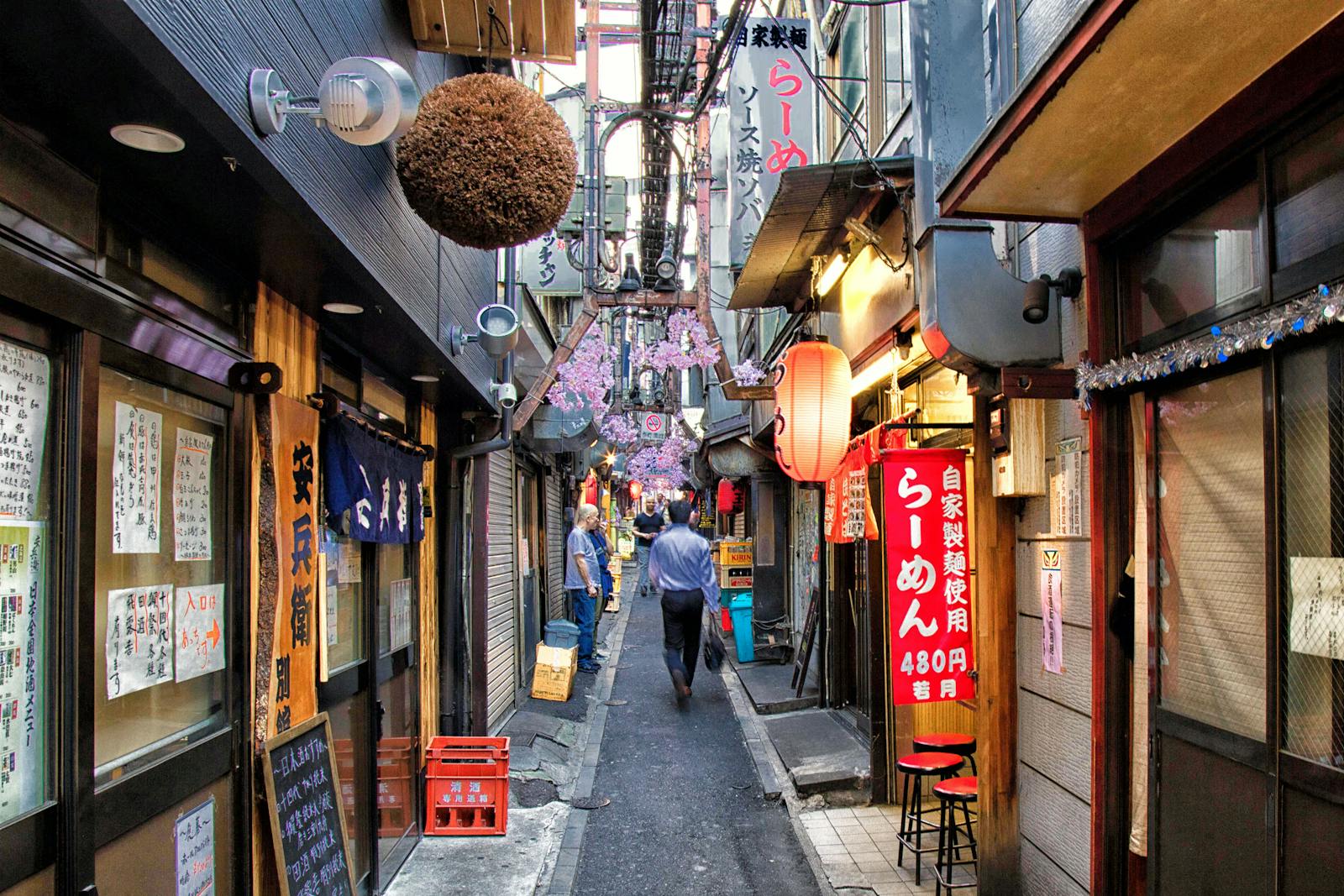
The single biggest money-saver in Tokyo costs nothing. Walk one or two streets back from the main tourist drag. The ramen shop on the famous corner and the ramen shop 90 seconds behind it are often run to the same standard — but the back-street one is priced for locals, not for the photo. Tokyo is dense; you are never far from a cheaper, equally good option. Build that one habit and the rest of this list does the work.
1. Gyudon (beef bowl) — the ¥500 everyday king
What it is: Gyudon is thin-sliced beef simmered with onion in a sweet-savory soy sauce, served over rice. It is Japan's original fast food — fast, filling, and cheap.
The three big chains are Yoshinoya, Sukiya, and Matsuya, and they are everywhere — near stations, open early, often 24 hours. A regular-size beef bowl runs roughly ¥450–¥500 (as of late 2025, Sukiya and Matsuya sit near the lower end, Yoshinoya around ¥498). Add a miso soup and a side and you are still comfortably under ¥1,000.
Local tips:
- Matsuya uses ticket machines at the door — many have English. Pick, pay, sit, hand the ticket over.
- A "set" (teishoku) adds miso soup and salad for a small bump. Worth it.
- These are not "lesser" food to locals. Office workers eat here constantly. You are not slumming it.
2. Standing soba (tachigui) — the ¥350 commuter secret
What it is: Tachigui soba means "stand-and-eat soba" — small noodle counters, often inside or beside train stations, where you eat standing up in a few minutes. Soba are thin buckwheat noodles; the basic hot bowl is kake soba.
This is the cheapest hot meal in the city. A plain bowl of kake soba runs around ¥350–¥400, and even with a piece of tempura on top you rarely cross ¥600. It is what commuters grab between trains.
Local tips:
- Buy a ticket from the machine first, hand the stub to the counter, and your bowl appears in under a minute.
- Add kakiage (a mixed vegetable tempura fritter) for the classic upgrade — usually ¥100–¥150.
- Look for these inside big stations. They hide in plain sight while everyone queues for pricier food upstairs.
3. Self-serve udon — build your own bowl from ¥390
What it is: Udon are thick, chewy wheat noodles. Self-service chains like Marugame Seimen run cafeteria-style: you grab a bowl, choose your noodle, slide along a counter adding tempura and rice balls, and pay at the end.
A base kake udon starts around ¥340–¥390, and tempura sides run roughly ¥80–¥200 each. You control the total — one fritter or four. Two tempura and a bowl still land under ¥800.
Local tips:
- The line is the menu. Point at what you want; no Japanese needed.
- Free toppings (green onion, tempura crumbs, ginger) usually sit at the counter — pile them on.
- Great for picky eaters and kids: everyone builds their own.
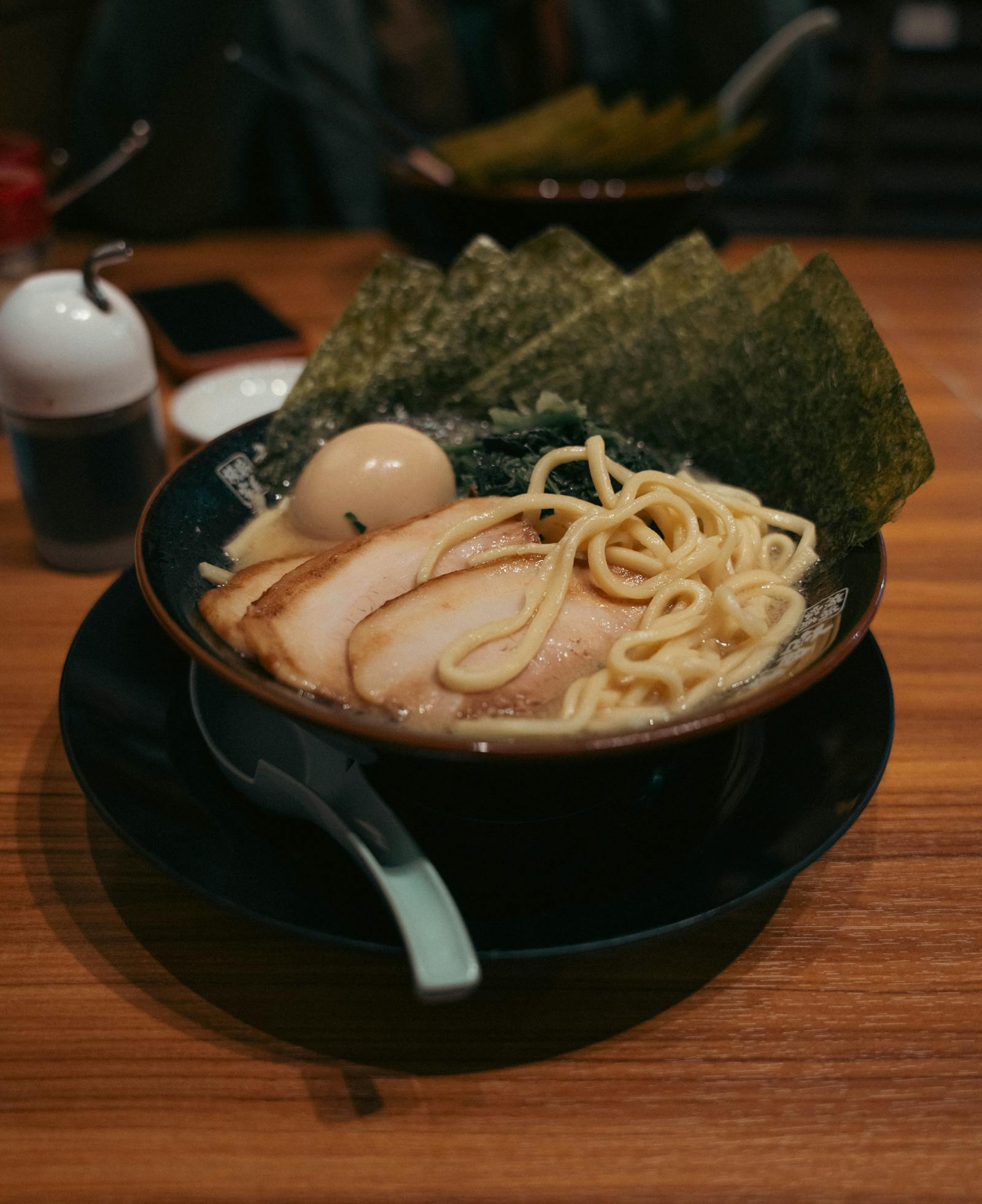
4. Cheap ramen — under the "¥1,000 wall"
What it is: Tokyo's signature noodle bowl — wheat noodles in a rich broth (soy, miso, pork, or chicken).
Here is the honest 2026 reality: a good independent ramen shop now often runs ¥900–¥1,200, and the old "ramen should never cost more than ¥1,000" rule is breaking as ingredient costs rise. But you can still eat ramen well under ¥1,000 if you know where:
- Budget chains like Kourakuen put a solid bowl around ¥600–¥760, and a ramen-plus-rice/gyoza combo under ¥1,000.
- Back-street independents (see the one rule above) frequently land a standard bowl in the ¥700–¥850 range.
- Even the well-known chains stay under ¥1,000 if you order the standard bowl — the verified numbers prove it: Yamaokaya holds its shoyu, miso and shio at just ¥690, Ippudo's classic Shiromaru runs about ¥850, and Tenkaippin's rich kotteri bowl lands near ¥920. The famous exceptions sit just above the line: Ichiran, now about ¥1,080 in Tokyo (our honest take here), and the legendary Menya Musashi at around ¥1,030 for the standard bowl — worth it as a treat, just not your everyday option (why it's special).
Local tips:
- Many ramen shops use ticket machines — money in, press your bowl, done.
- "Standard" or "shoyu (soy) ramen" is the cheapest line on most menus and usually the shop's honest baseline.
- Skip the famous queue-around-the-block shop if you are watching yen; the ¥800 bowl nearby is often nearly as good.
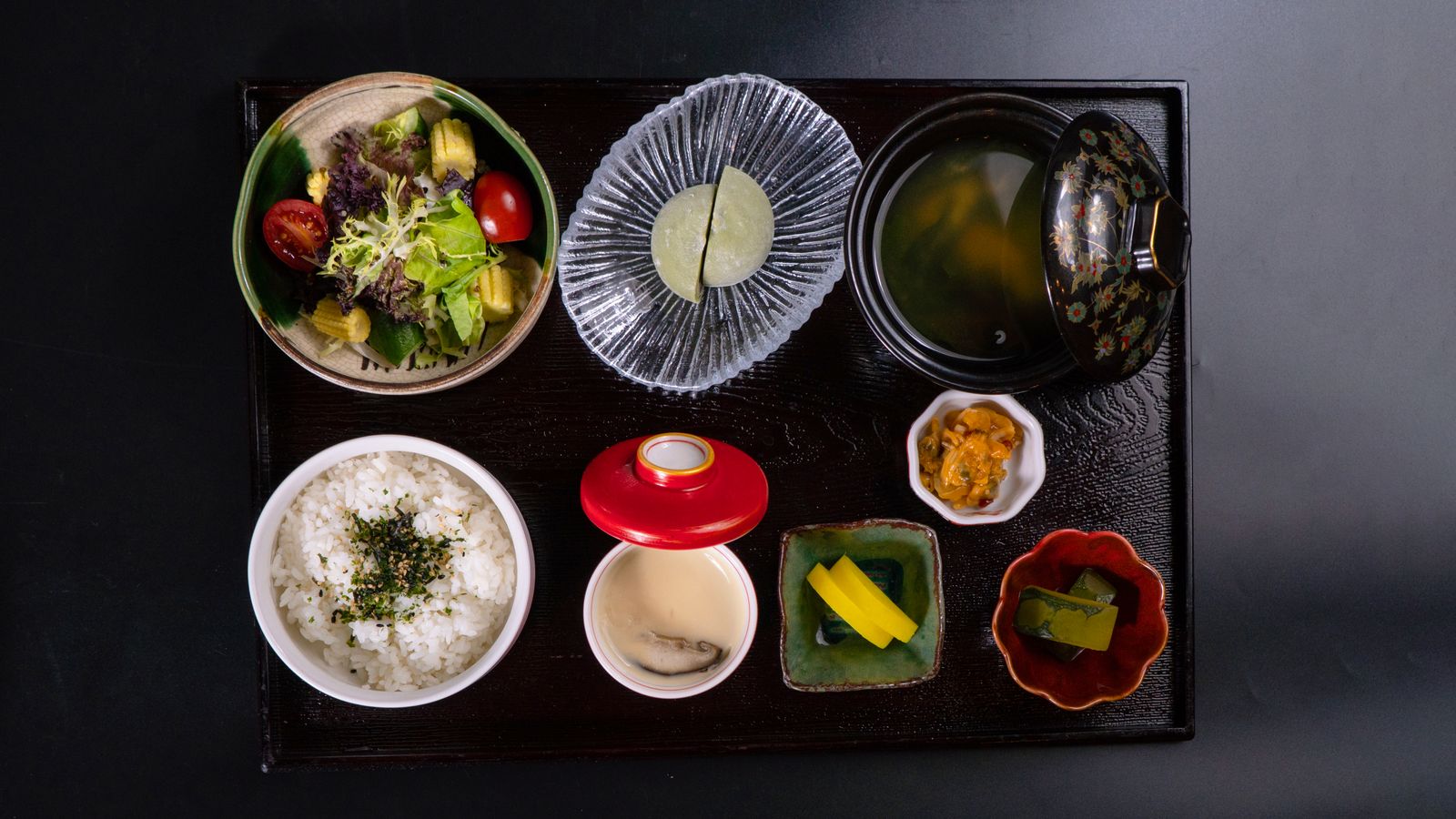
5. Teishoku (set meals) — a full, balanced lunch under ¥1,000
What it is: A teishoku is a set meal — a main dish (grilled fish, fried chicken, ginger pork) with rice, miso soup, and small sides. It is the closest thing to a home-cooked Japanese lunch, and it is how locals eat a proper meal cheaply.
Chains like Yayoiken and Ootoya specialize in this. At Yayoiken, individual sets start around ¥630 (ginger pork) and many land in the ¥700–¥950 range; rice refills are often free. Ootoya offers plenty of fish and meat sets under ¥1,000.
Local tips:
- Yayoiken uses ticket machines with English; Ootoya has picture menus.
- "Free rice refill" (okawari) at many Yayoiken locations turns a ¥700 set into a genuinely big meal.
- This is the move when you want vegetables and balance, not just carbs.
6. Curry rice — comfort food from ¥500
What it is: Japanese curry is mild, thick, and savory — its own thing, not Indian or Thai. CoCo Ichibanya ("CoCo Ichi") is the national chain, famous for letting you customize spice level, rice size, and toppings.
A basic curry starts around ¥500, and most plates land ¥500–¥1,000 depending on toppings (as of late 2025, fully loaded plates push toward ¥1,000). A few Tokyo branches (e.g., Shinjuku, Akihabara) even do a morning curry set around ¥414.
Local tips:
- Order the base curry and add one topping to stay cheap and still feel custom.
- Spice levels climb fast — level 1–2 is plenty for most first-timers.
- Vegetarian curry exists at CoCo Ichi (around ¥620–¥680), a handy budget option.
7. Conveyor-belt sushi — yes, sushi is on the cheap list
What it is: Kaiten-zushi — "revolving sushi" — where plates move past you on a belt or arrive by touchscreen order. Chains like Sushiro, Kura Sushi, and Hama Sushi turned sushi into everyday food.
Plates start around ¥110–¥150 each (usually two pieces per plate). A genuinely satisfying meal of 6–8 plates lands well under ¥1,200. This is how Tokyo families eat sushi — not at the ¥10,000 counter.
Local tips:
- Touchscreens have English; order directly instead of waiting for the belt.
- Watch the plate colors/prices — a few "premium" plates cost more, but the base plates are the deal.
- Free green tea powder + hot water tap at your seat. No drink charge.
8. Konbini (convenience stores) — the ¥500 backup that is actually good
What it is: Konbini — 7-Eleven, FamilyMart, Lawson — are Japan's convenience stores, and unlike most countries, the food is genuinely good. This is the locals' real fallback for breakfast, a train lunch, or a late dinner.
- Onigiri (rice balls, wrapped, with a filling): around ¥130–¥200 each. Two or three make a light meal.
- Bento boxes: roughly ¥350–¥600 for a full rice-plus-protein-plus-sides box.
- Hot counter: fried chicken, steamed buns, oden in winter — ¥150–¥300 a piece.
A full konbini lunch — onigiri, a piece of hot chicken, a drink — easily comes in under ¥500.
Local tips:
- They will microwave your bento at the register; just say "onegaishimasu" (please) and nod yes.
- Onigiri have a clever wrapper that keeps the seaweed crisp — follow the numbered tabs (1-2-3).
- This is the cheapest reliable meal anywhere in Tokyo, day or night.
A sample day of eating in Tokyo — under ¥2,000 total
- Breakfast: konbini onigiri × 2 + coffee — around ¥450
- Lunch: standing soba with kakiage tempura — around ¥500
- Dinner: teishoku set with free rice refill — around ¥850
Total: roughly ¥1,800 for the day — three real meals, all the way locals actually eat. The tourist-street version of the same three meals can easily run ¥6,000+.
What you actually need to pull this off
You do not need much. But two small things make eating like a local far smoother:
- A working phone with data (eSIM). Google Maps to find the back-street shop, Google Translate's camera to read a ticket machine or a handwritten menu — these turn "intimidating" into "easy." A travel eSIM for Japan activates before you land, with no pocket Wi-Fi to carry or return.
- A rechargeable IC card (Suica/PASMO) or just cash. Many small soba and ramen counters are cash-only or ticket-machine-only. Keep ¥3,000–¥5,000 in coins and small bills on you, and you will never be stuck at the one shop that does not take cards.
These are affiliate links: they cost you nothing extra, and a small commission helps keep these guides free.
The honest bottom line
Tokyo is only expensive if you let the tourist streets feed you. Walk one street back, eat where the salarymen and students eat, and you will spend less and eat better — the gyudon counter, the standing-soba stall, the teishoku set with free rice. That is the real Tokyo, and it is cheaper than you have been told.
Eat well. Spend like a local.
Keep exploring Tokyo
- Ichiran — famous tonkotsu, solo booths.
- Ippudo — order in English by tablet.
- Ramen Shop (Ra-Sho) — a true local bowl.
- Suica & PASMO — tap through every gate.
- Ikebukuro Station — Tokyo's ramen heartland.
Did this help you plan? If you want to keep these guides coming, a small tip goes straight back into eating my way around Tokyo so I can tell you what is actually worth it.
☕ Buy me a coffee
Got a question about a specific area or dish?
Ask me directly — I reply in public so the next traveller benefits too: