Food · Ramen
Ichiran Ramen: An Honest Local Guide to Tokyo's Most Famous Tonkotsu
It's the ramen every guidebook names: solo booths, a tick-box order sheet, a bowl you build yourself. Here's the honest local take — why it's the perfect first ramen in Japan, exactly how to order, and whether it's worth the price.
If you've read anything about eating in Tokyo, you've met Ichiran (一蘭) — the chain with the private little booths where you never have to talk to anyone. It's famous for good reason, and it's genuinely a lovely first ramen experience. But I'll be straight with you, the way a friend who lives here would: Ichiran is one of the pricier ways to eat ramen in this city. Whether that's money well spent depends entirely on what you want out of the meal — so let me walk you through it.
What is Ichiran, exactly?
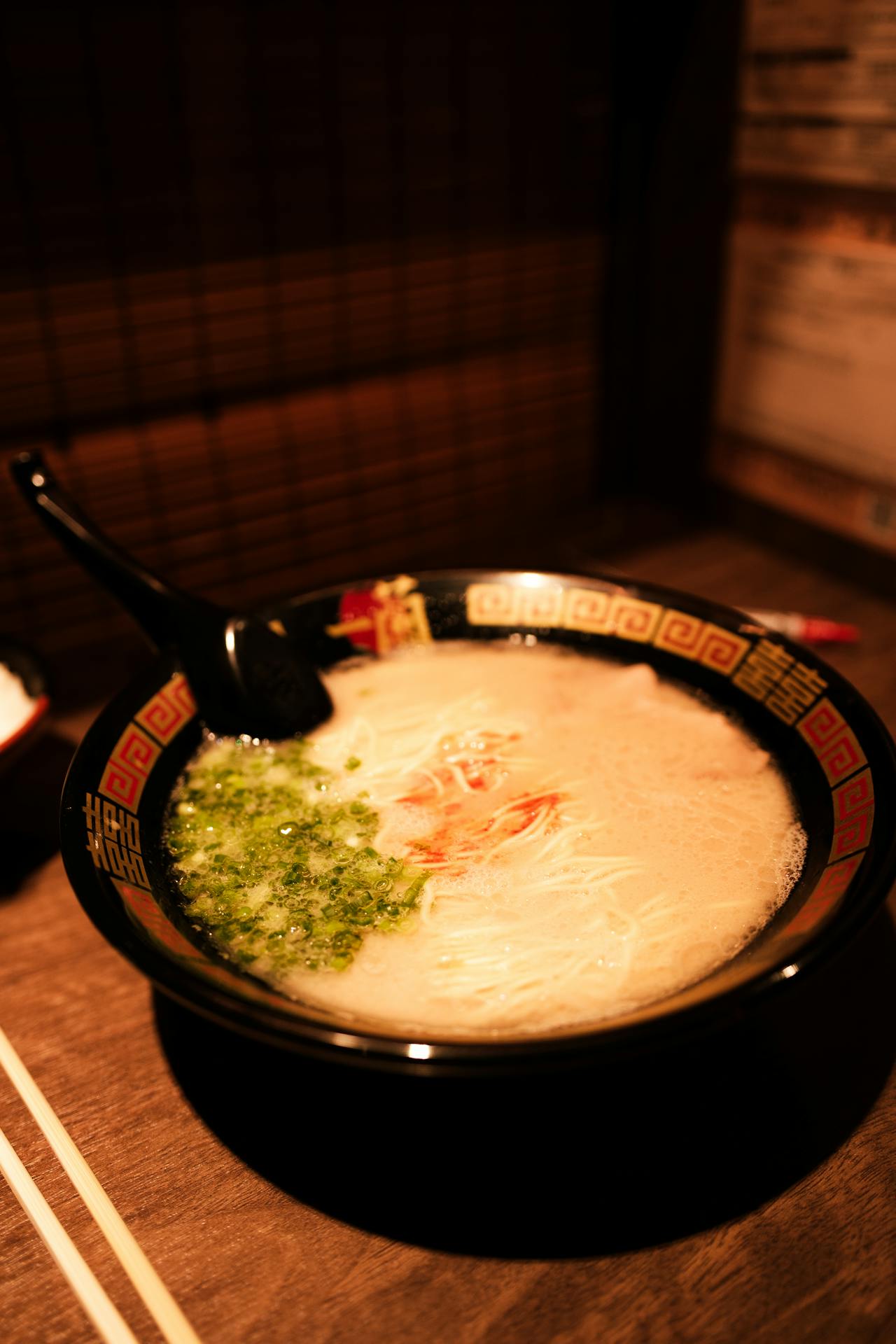
What it is: a chain that serves one thing — tonkotsu (rich, milky pork-bone) ramen — and does nothing else. No side menu of miso or soy versions; just that single bowl, refined obsessively. The style comes from Hakata in Fukuoka, the home of tonkotsu, with thin straight noodles and a creamy pork broth.
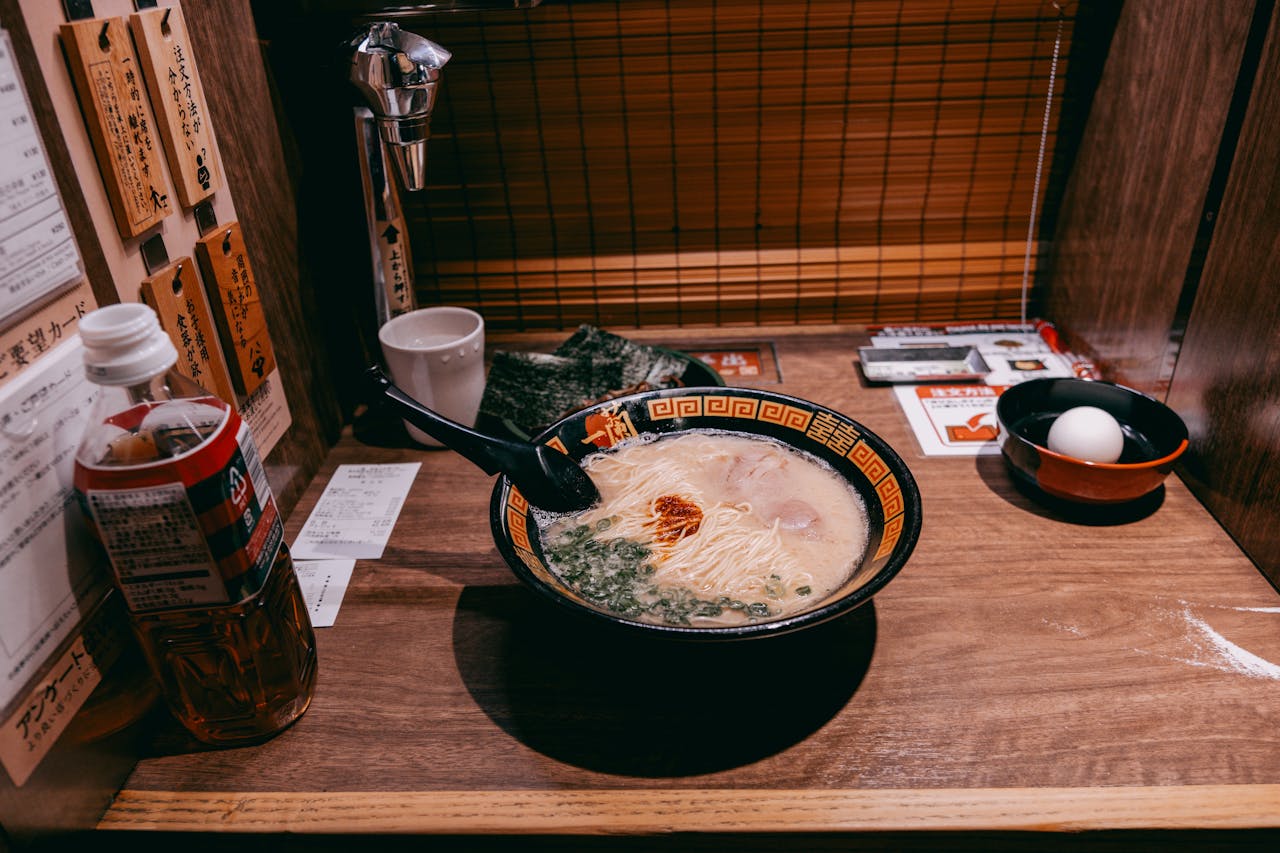
Ichiran's signature touch is the dollop of "secret red sauce" floating in the middle of the bowl — a chilli-and-spice blend that's theirs alone. You can dial it up or down (more on that below). The broth is deliberately clean and smooth rather than heavy or funky, which is a big part of why first-timers and people who think they "don't like" pork-bone ramen tend to love it here.
The famous booths — why visitors love them
This is Ichiran's masterstroke. You eat in an individual booth (they call it the "flavour-concentration counter"), walled off on both sides, with a little bamboo blind in front of you that the staff raise to slide your bowl through, then lower again. You face nothing but your ramen.
For a visitor that's a gift: no etiquette to worry about, no language to fumble, no feeling watched while you slurp. It's brilliant if you're eating alone, travelling solo, jet-lagged, or just want a quiet, low-pressure first ramen. (The flip side: it's not where you'd take a group for a chatty meal — the booths are made for solitude, not conversation.)
The order sheet: how to build your bowl
While you wait you fill in a little paper order sheet — and yes, there are English, Chinese and Korean versions, so just ask. You tick your preferences across seven choices, and the kitchen makes your bowl exactly that way. The options are roughly:
- Broth richness — light, medium or rich
- Oiliness — none, light, normal or extra
- Garlic — none through to extra
- Green onion — none, white onion or green onion
- Char siu (pork slice) — with or without
- Secret red sauce — your spice level, from none up to several notches of heat
- Noodle firmness — from extra-firm to soft
A safe first-timer's order: richness medium, oil normal, garlic a little, green onion yes, char siu yes, red sauce level 1–2 (it builds fast), noodles firm (the Hakata way — they soften in the broth as you eat). You can't really go wrong; this is the bowl most locals would point you to on a first visit.
Kaedama — the extra-noodle trick
Here's the bit of Hakata culture worth knowing. The first serving of noodles is modest on purpose. When you've eaten about half, press the button (or hand over a kaedama ticket) and order a second helping of noodles dropped straight into your remaining broth — for around ¥210 (a half-portion is about ¥150). The timing trick: order it when you're halfway through the first batch, and the fresh noodles arrive right as you finish, perfectly hot. It's the local move, and it makes the meal feel like much better value.
How ordering actually works, start to finish
- Buy a ticket first. Most branches use a vending machine at the entrance — pick your bowl (and any kaedama or toppings), pay, and take the ticket.
- Take a booth. Staff seat you; hand over your ticket and the filled-in order sheet.
- Eat. Your bowl slides through, the blind drops, and you're alone with your ramen.
- Paying: ticket machines take cash, and most central branches also accept cards, IC cards (Suica/PASMO), and QR payments — handy, though check the machine. (New to IC cards? See our Suica & PASMO guide.)
- One thing to note: between about 10 pm and 6 am many branches add a late-night surcharge (roughly 10%). Worth knowing if you're after a post-drinks bowl.
The honest local verdict: is it worth it?
Here's where I earn your trust. Ichiran is not the cheapest ramen, and most locals don't eat it every week — we have a neighbourhood shop for that. But it is excellent at a very specific job, and for a visitor that job is valuable:
- Go to Ichiran if it's your first ramen in Japan, you're eating solo, you're nervous about the ordering ritual, you want it in English, or you simply want a reliably great, customisable bowl with zero social pressure. It nails all of that, every single time, at any hour.
- Skip it (for now) if you're counting yen, or you're already comfortable here and want the best bowl for the money. That's when you walk one street back and find a local shop doing a sharper bowl for less — exactly the spirit of our cheap-eats guide.
Think of Ichiran as the perfect training-wheels ramen: the easiest, most comfortable on-ramp into one of Japan's great food obsessions. Prefer a sit-down bowl you can share with someone, ordered from a screen in your own language? That's its easy sibling, Ippudo. And when you're ready for a richer, more characterful "destination" bowl, step up to Menya Musashi or the line-up tonkotsu of Mutekiya in Ikebukuro. Feeling brave and hungry? Ramen Butayama is the friendly way into Tokyo's intense "Jiro-style" bowls.
Where to find it in Tokyo
There are around eighteen Ichiran branches across Tokyo, so you're rarely far from one. The handiest central spots line up neatly with our station guides:
- Shibuya — two branches; the well-known Spain-zaka one is at 13-7 Udagawa-cho, Shibuya-ku — Koyasu One Bldg B1F (東京都渋谷区宇田川町13-7 コヤスワンB1F), open 24 hours, about 5 minutes from the station. 📍 Open in Google Maps. Among the busiest; expect a queue at peak times.
- Shinjuku — several, including Kabukichō and the central east side.
- Ueno & Asakusa — an Ueno branch plus two in Asakusa. The Asakusa Rokku branch serves its tonkotsu in a special octagonal bowl — a fun one for collectors of small details.
- Ikebukuro — two branches near the east exit.
- Harajuku, Nakano, Shimokitazawa, Kichijōji and out into Tachikawa, Machida and beyond — handy if you're exploring the wider city.
If you remember only three things
- It's the perfect first ramen — solo booth, English order sheet, zero pressure, reliably great.
- Order kaedama at the halfway point (~¥210) so fresh noodles land just as you finish.
- It's a treat, not a bargain — about ¥1,080 a bowl. For everyday value, a neighbourhood shop wins.
Make the most of your food crawl
- A phone with data (eSIM). For finding the nearest branch, checking queues, and reading the menu, you'll want to be online. A travel eSIM for Japan activates before you land — no airport queue.
- Want the deeper cut? A small-group Tokyo ramen or food tour takes you past the famous chains to the local shops most visitors never find.
These are affiliate links: they cost you nothing extra, and a small commission helps keep these guides free.
The local bottom line
Ichiran is famous because it's genuinely good at being easy — a warm, foolproof, English-friendly bowl you can enjoy alone at any hour without a moment's awkwardness. Treat it as your confident first step into Tokyo ramen, learn the kaedama trick, and savour it. Then walk one street back and let the city's smaller shops show you how deep this obsession really goes.
Helped you order your first bowl with confidence? If these guides are useful, a small tip keeps them coming.
☕ Buy me a coffee
Question about ordering, spice level, or finding a quieter branch?
Ask me directly — I reply in public so the next traveller benefits too: