Food · Ramen
Musashiya: Hearty Yokohama "Iekei" Ramen, Your Way
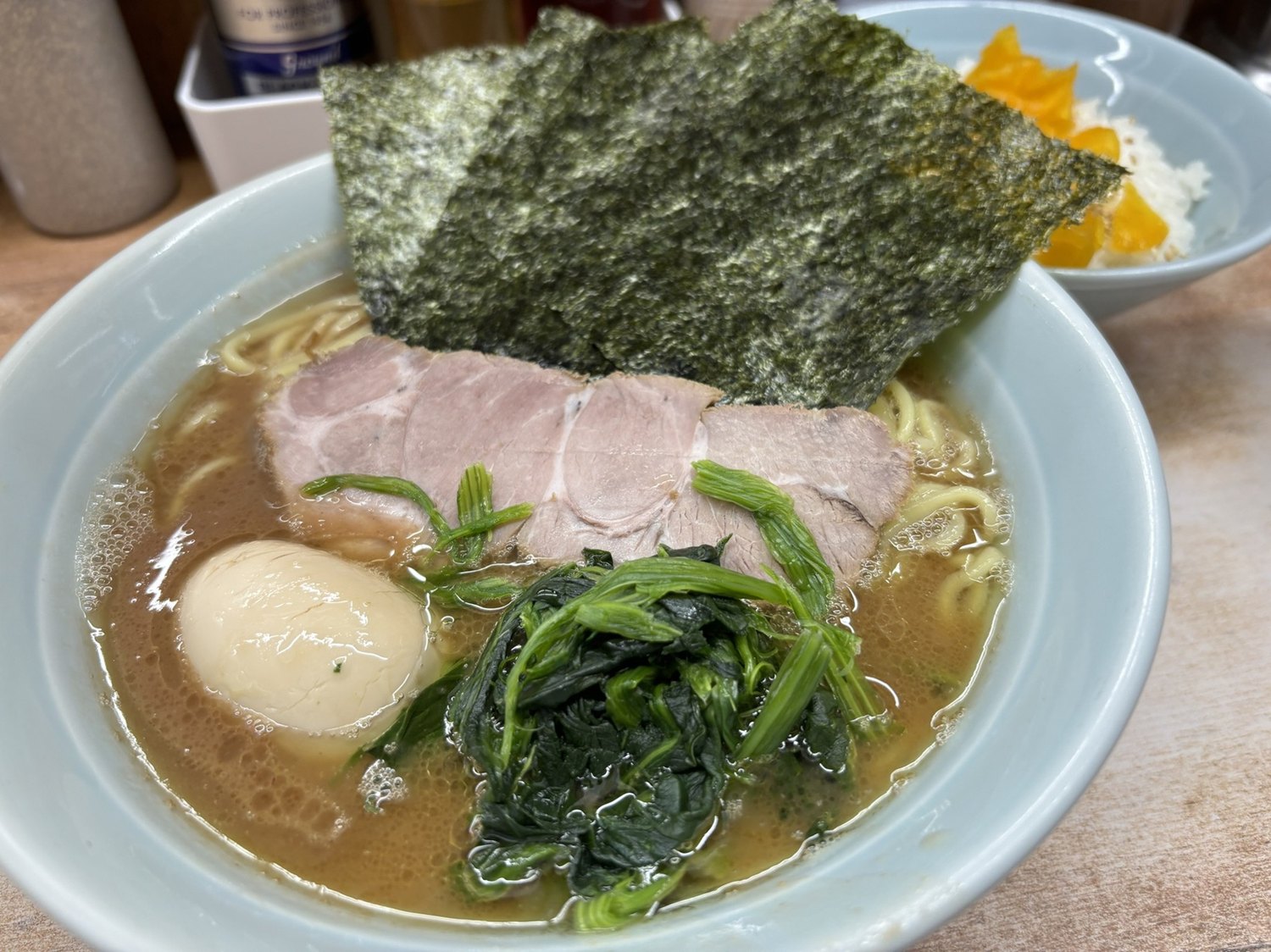
Every bowl so far on this site has been tonkotsu. Musashiya is a different beast: iekei — Yokohama's rich soy-tonkotsu with a slick of chicken oil, thick noodles, spinach, nori, and a bowl of rice on the side. You order it your way, it's filling, and it's cheap. This is the comfort ramen locals actually eat most.
Ask a Tokyo salaryman what they eat after a long day and a lot of them will say iekei (家系) — and one of the big, friendly chains doing it is Musashiya (武蔵家). It's not delicate, it's not refined, and that's the point: it's a hearty, customisable, rib-sticking bowl built for hungry people on a budget. Let me explain the style, then walk you through the one thing that trips up visitors — ordering it "your way."
What is iekei, and what is Musashiya?
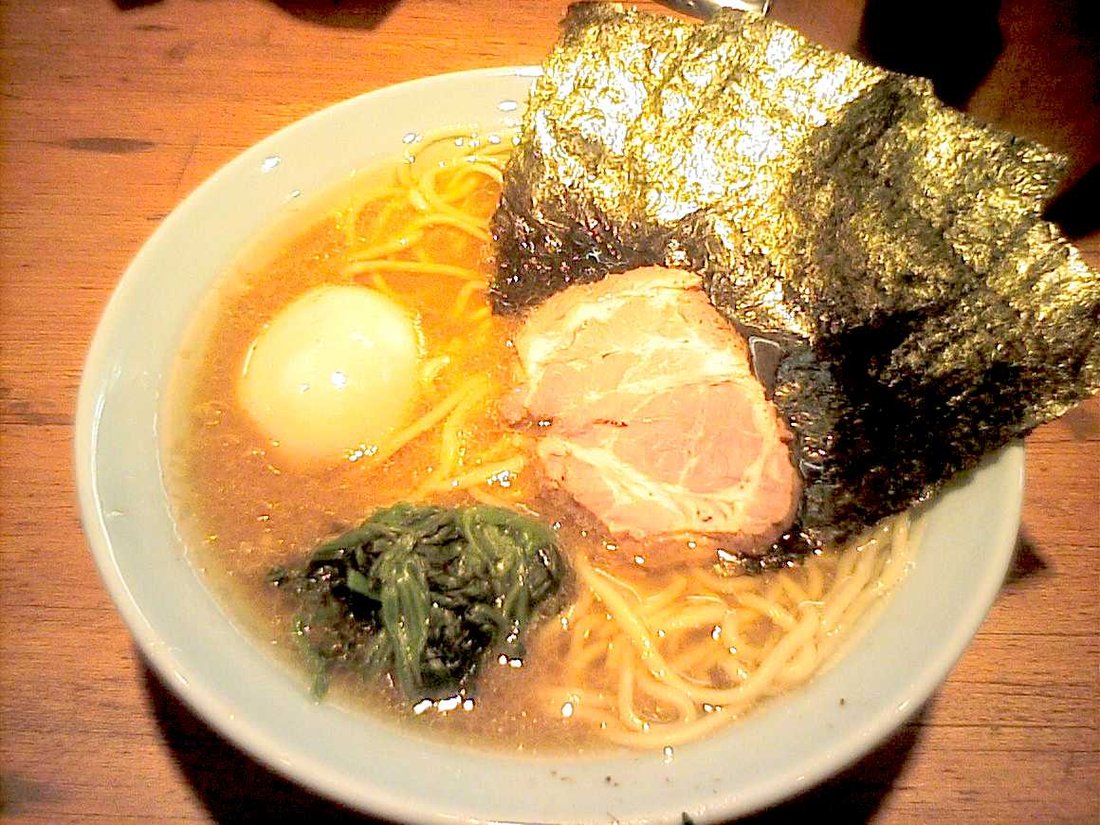
What it is: iekei ("ee-eh-kay") is a ramen genre born in Yokohama in the 1970s that blends two traditions — Hakata-style pork-bone tonkotsu and Tokyo-style chicken-and-soy. The broth mixes pork bones, chicken bones and a soy-sauce tare, finished with chicken oil (chiyu) that floats in a glossy layer on top. Toppings are fixed and iconic: spinach, sheets of nori, a slice of shoulder char siu, and chopped onion, over thick, flat noodles.
Musashiya is one of the biggest and most approachable iekei chains, with branches all over Tokyo and the Kanto region. Its bowls lean heavy, glossy and faintly sweet, with chewy noodles — and the shops themselves are roomy, rustic and unpretentious, the opposite of a cramped specialist counter. It's iekei as everyday food, done well.
Ordering it "your way" — the iekei ritual
This is the part that surprises first-timers, and it's the fun of iekei. When you order, you get to set three things to taste:
- Broth richness — koime (rich) / futsuu (normal) / usume (light).
- Noodle firmness — katame (firm) / futsuu (normal) / yawarakame (soft).
- Oil amount — oome (more chicken oil) / futsuu / sukuname (less).
A safe first-timer's order: all three futsuu (normal) is never wrong. If you want the full, classic iekei hit, the local move is "koime, katame, oome" — rich broth, firm noodles, extra oil. Don't overthink it; staff hear it a hundred times a day.
The rice move — don't skip it
Iekei and rice are a package. Order a bowl of rice (often free at Musashiya) and use it the local way: lay a sheet of nori across the rice, dip another sheet in the broth until it softens, wrap a little rice in it — and at the end, spoon the last of that rich soup over the remaining rice. It turns a bowl of ramen into a genuinely filling meal, and it's half the reason iekei fans are so devoted.
What to order
- Ramen (ラーメン) — the standard bowl. Soy-tonkotsu, spinach, nori, char siu, chopped onion. Around ¥800–900. Set your richness / firmness / oil when you order.
- Rice — get it. Often free; the iekei meal is built around it.
- Easy add-ons. Extra nori, extra spinach, a seasoned egg, or more char siu are the classic top-ups if you're hungry.
How ordering works
- Ticket machine, usually. Most branches have a vending machine at the entrance — buy your ramen (and rice/toppings) ticket, then tell staff your richness / firmness / oil preferences when you sit.
- Roomy, casual seating. Counter and tables; fine for two or a group, unlike the tiny specialist shops.
- Paying: the machine takes cash; some branches also take cards or IC. Have cash as backup. (New to IC cards? See our Suica & PASMO guide.)
- Timing: hours vary by branch and many run late (the Nakano flagship into the small hours). Off-peak is calmest.
(One quick note to avoid confusion: Musashiya (武蔵家) is an iekei chain and is not the same shop as Menya Musashi, the double-soup specialist — similar name, completely different bowl.)
The honest local verdict: is it worth it?
Here's where I earn your trust. Iekei is not subtle, and Musashiya is unashamedly hearty — that's exactly what makes it great, for the right mood.
- Go to Musashiya if you're hungry and want a filling, customisable, great-value bowl with free rice; you're curious about iekei, a genre most visitors never try; or you just want honest, rib-sticking comfort food after a long day of walking.
- Skip it (for now) if you want something light and delicate — iekei is rich, salty and oily by design. For a cleaner first bowl, Ichiran or Ippudo is the gentler call.
My honest framing: tonkotsu shops are the bowls visitors photograph; iekei is the bowl locals actually live on. Trying a Musashiya — rice and all, ordered "koime katame oome" — is one of the most genuinely local ramen experiences you can have in Tokyo, and one of the cheapest. And if you want to taste a root of iekei itself, see our Ramen Shop (Ra-sho) guide — the humble roadside chain where Yoshimuraya's founder reportedly trained before iekei was born. For more everyday-cheap eats, our cheap-eats guide is the companion piece.
Practical information
Musashiya (武蔵家) — Yokohama iekei ramen
- Where (Nakano honten / 中野本店): 4-4-1 Chuo, Nakano-ku, Tokyo — Toko Bldg 1F (東京都中野区中央4-4-1 藤晃ビル1F), about a 1-minute walk from Shin-Nakano Station. 📍 Open in Google Maps. Many related Musashiya branches are spread across Tokyo and Kanto, so there's likely one near you too.
- Hours: vary by branch; many open late (the Nakano flagship runs into the small hours). Check the specific branch.
- Budget: about ¥800–900 for the bowl; rice is often free.
- Payment: cash via the ticket machine; some branches also take cards/IC.
- Order: set your broth richness, noodle firmness and oil amount; add a (free) rice.
- Good to know: it's rich and salty — drink water, and let the rice carry the last of the soup.
Where to find it: Musashiya branches across Tokyo
There are a lot of Musashiya branches around Tokyo, and because each one is run with its own hand, many do their own limited bowls and toppings — another reason regulars have a favourite. Here are the branches by area (each name opens in Google Maps). Hours and details vary by shop, so check before a special trip.
Central Tokyo (23 wards)
- Nakano Honten (中野本店) — 4-4-1 Chuo, Nakano-ku, Tokyo (Toko Bldg 1F)
- Ochanomizu (御茶ノ水店) — 1-8-4 Kanda-Surugadai, Chiyoda-ku, Tokyo
- Ikebukuro (池袋店) — 3-23-8 Nishi-Ikebukuro, Toshima-ku, Tokyo (Hirai Bldg 1F)
- Hakusan (白山店) — 1-10-4 Honkomagome, Bunkyo-ku, Tokyo (Hakusan Dai-1 Bldg 1F)
- Hatagaya (幡ヶ谷店) — 2-13-4 Hatagaya, Shibuya-ku, Tokyo (Hatagaya Joseki Bldg 1F)
- Kita-Senju (北千住店) — 40-25 Senju-Asahicho, Adachi-ku, Tokyo (Yoshida Bldg 1F)
- Kita-Senju West (北千住西口店) — 2-55 Senju, Adachi-ku, Tokyo
- Oimachi (大井町店) — 5-4-10 Higashi-Oi, Shinagawa-ku, Tokyo
- Oyama (大山店) — 22-5 Oyama-Higashicho, Itabashi-ku, Tokyo
- Meidaimae (明大前店) — 1-1-1 Eifuku, Suginami-ku, Tokyo
- Itabashi (板橋店) — 1-63-9 Tokiwadai, Itabashi-ku, Tokyo (Maison de Hokuto)
- Ayase (綾瀬店) — 1-22-11 Kahei, Adachi-ku, Tokyo
- Chitose-Karasuyama (千歳烏山店) — 6-2-3 Minami-Karasuyama, Setagaya-ku, Tokyo
- Narimasu (成増店) — 2-17-21 Narimasu, Itabashi-ku, Tokyo
- HANARE (成増 / next to Narimasu) — 2-17-19 Narimasu, Itabashi-ku, Tokyo (Takano Bldg 1F)
Western Tokyo (Tama area)
- Mitaka (三鷹店) — 3-3-6 Osawa, Mitaka-shi, Tokyo (Thirty Road)
- Kokuryo (国領店) — 4-9-6 Kokuryocho, Chofu-shi, Tokyo
- Musashi-Sakai (武蔵境店) — 2-2-2 Sakai, Musashino-shi, Tokyo
- Higashi-Koganei (東小金井店) — 4-43-6 Higashicho, Koganei-shi, Tokyo
- Akitsu (秋津店) — 5-13-63 Akitsucho, Higashimurayama-shi, Tokyo
- Kodaira (小平店) — 4-32-8 Hanakoganei, Kodaira-shi, Tokyo
If you remember only three things
- It's iekei, not tonkotsu — Yokohama soy-tonkotsu with chicken oil, thick noodles, spinach and nori. A different genre, and a local staple.
- Order it your way — richness, firmness, oil. "Futsuu" all round is safe; "koime katame oome" is the classic.
- Get the (free) rice — dip the nori, soak the rice in the soup. That's the iekei meal.
Make the most of your ramen hunt
- A phone with data (eSIM). For finding the nearest branch and reading the machine, you'll want to be online. A travel eSIM for Japan activates before you land — no airport queue.
- Want a local to lead the way? A small-group Tokyo ramen or food tour takes you past the famous names to the back-street shops most visitors never find.
These are affiliate links: they cost you nothing extra, and a small commission helps keep these guides free.
The local bottom line
Musashiya is the ramen of normal Tokyo nights — big, rich, customisable, and cheap enough that you'll go back. It won't win a delicacy contest, and it isn't trying to: it's iekei, the genre locals are quietly loyal to, served generously with a free bowl of rice. Order it your way, soak the nori, finish with rice in the soup, and you'll have eaten ramen exactly the way the city actually does.
Helped you try a proper iekei? If these guides are useful, a small tip keeps them coming.
☕ Buy me a coffeeImage credit (the in-article close-up is a representative photo of the style, via Wikimedia Commons, resized): Hykw-a4, CC BY-SA 3.0.
Want a Musashiya branch near where you're staying?
Ask me directly — I reply in public so the next traveller benefits too: