Getting Around · Stations
Shibuya Station Without Getting Lost: A Local's Guide
The world's second-busiest station is a maze that stacks up — a subway on the third floor, another line buried five floors down — and it's been a building site for over a decade. Here's how a local reads it.
Shibuya is the second-busiest station on Earth, after Shinjuku. Four rail operators meet here — but the thing that makes Shibuya different from Ikebukuro or Shinjuku is that it's built in a valley. Instead of spreading east–west underground, Shibuya goes vertical — its lines are stacked on different floors. And it's been one giant redevelopment since 2012 (running to around 2034), so the station literally changes shape from year to year.
That sounds intimidating. It isn't, once you stop thinking in compass directions and start thinking in floors.
Think in floors — and meet the subway in the sky
Shibuya sits in a valley (the Shibuya River actually runs beneath the station), so the layout grew upward and downward instead of outward. The headline quirk:
The Ginza Line — a subway — arrives on the 3rd floor, up in the air, directly above the JR platforms. Meanwhile the Fukutoshin and Tokyu Toyoko Lines are buried five floors underground. At Shibuya, your mental model is elevators and floor numbers, not "east vs west."
Why your train changes its name: through-running
What it is: through-running (相互直通運転) — across Tokyo, many trains roll straight from one company's line onto another's without you changing. The line name on the train changes mid-journey, but you stay put.
Shibuya is the poster child for this. The Fukutoshin Line and the Tokyu Toyoko Line share the very same deep platform and run as one train — it pulls in badged as "Fukutoshin" and leaves as "Toyoko," and can keep going all the way out to the Tobu Tojo or Seibu Ikebukuro lines far to the north. The same happens with the Hanzomon Line and the Tokyu Den-en-toshi Line.
The practical upshot: read the train's final destination, not just the line name on the sign — and very often you don't need to "transfer" at all. Understanding this one idea makes all of Tokyo's trains less confusing.
The lines, by floor
- JR (Yamanote, Saikyo, Shonan-Shinjuku) — the central spine, in and under Shibuya Scramble Square.
- Ginza Line (Tokyo Metro) — 3rd floor, elevated.
- Hanzomon Line + Tokyu Den-en-toshi Line — underground, same operation.
- Fukutoshin Line + Tokyu Toyoko Line — deep (5th basement), same platform.
- Keio Inokashira Line — over in Shibuya Mark City, on the Hachiko (west) side.
The surface: Hachiko and the Scramble
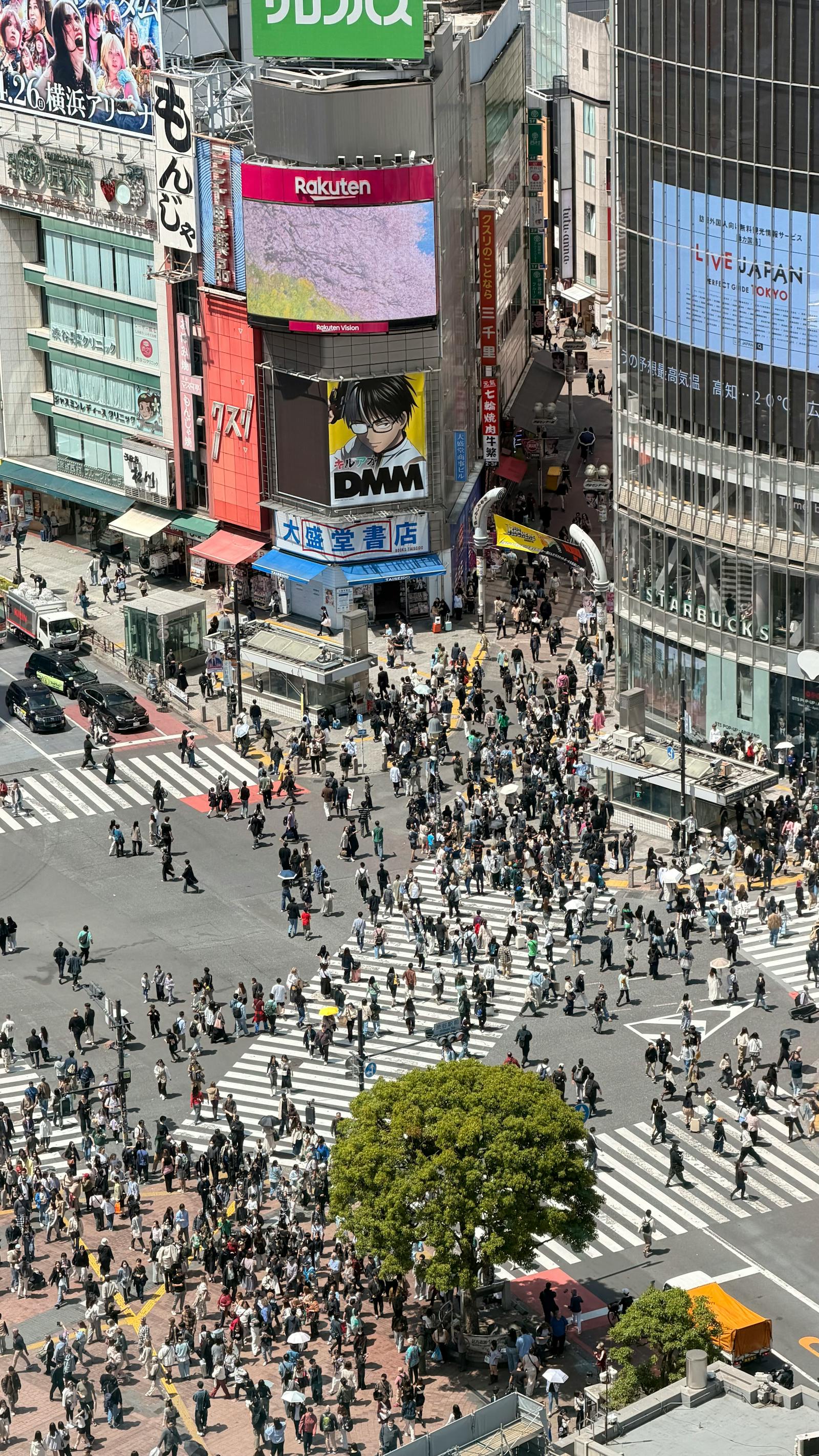
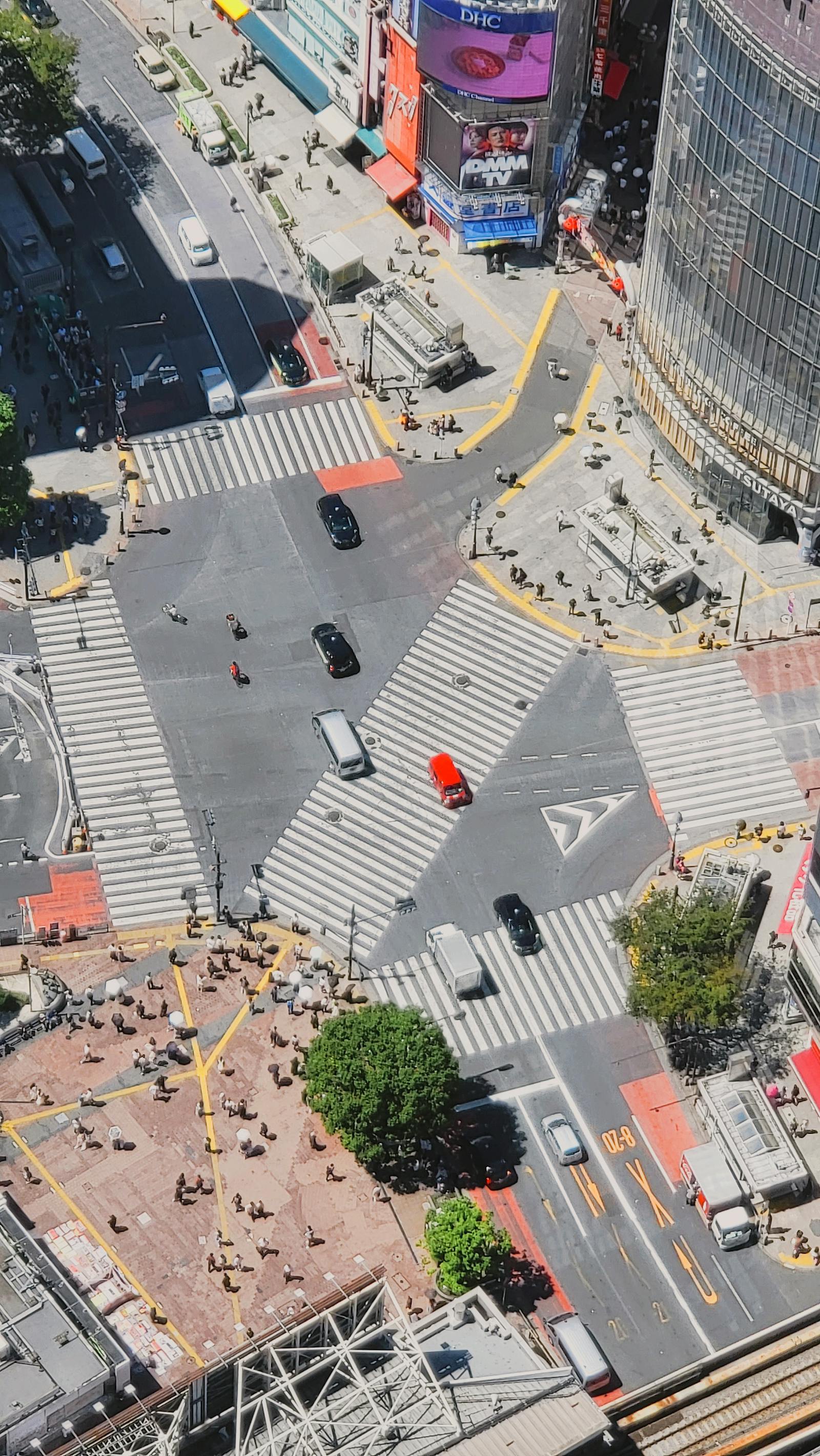
The famous way out is the Hachiko Exit, named for the loyal-dog statue beside it — Tokyo's most classic meeting point ("meet me at Hachiko" is something everyone says). Step out and you're standing at the Shibuya Scramble Crossing, with Center-gai — the youth shopping street — running off it.
A heads-up on Dogenzaka
Up the Dogenzaka slope, the streets shade into a nightlife and love-hotel area. It's fine to pass through by day, and Shibuya overall is lively and largely easygoing — it's the "young people's town." But at night, I wouldn't go wandering deep into the back alleys up there. Stick to the main, well-lit drags and you're golden.
A view worth knowing
Right above the station, Shibuya Sky — the rooftop deck on Shibuya Scramble Square — has a famous glass escalator and a 360° open-air view straight down onto the crossing. It's a paid attraction, but the night view is genuinely spectacular if you fancy a splurge.
And as everywhere in Tokyo: look up and follow the overhead signs — the yellow-and-black ones mark the numbered exits. In a station this vertical, also watch the floor indicators.
If you remember only three things
- Think in floors, not directions — the Ginza Line is up on 3F, Fukutoshin/Toyoko are five floors down.
- Read your train's final destination — through-running means the line name changes but you stay on.
- Aim for the Hachiko Exit to reset and find the crossing.
What makes this easy
- A phone with data (eSIM). In a vertical, ever-changing station like Shibuya, Google Maps' indoor floors and exit numbers are gold, and Google Translate's camera reads any sign. A travel eSIM for Japan activates before you land — no pocket Wi-Fi to carry.
- A Suica or PASMO IC card. Tap through every gate — and because so many Shibuya trains through-run onto other companies' lines, an IC card quietly sorts out the cross-operator fares for you.
Where to stay near Shibuya Station
Planning to stay near Shibuya Station? Agoda lists thousands of Tokyo hotels — compare prices for your dates and book in a few taps.
🏨 Find your hotel in Tokyo (Agoda)These are affiliate links: they cost you nothing extra, and a small commission helps keep these guides free.
The local bottom line
Shibuya is a valley station that grew upward, so it breaks the east–west logic of the other big hubs. Think in floors, read your train's final destination, and aim for Hachiko when you need to reset. Do that — and ride out the construction with a shrug, like the rest of us — and the world's second-busiest station is no match for you.
Keep exploring Tokyo
- Shinjuku Station — the world's busiest, decoded.
- Ikebukuro Station
- Tokyo Station
- Suica & PASMO — tap through every gate.
- Ichiran — the famous tonkotsu, decoded.
- Tokyo meals under ¥1,000
Helped you crack Shibuya? If these guides are useful, a small tip keeps them coming.
☕ Buy me a coffee
Trying to reach a specific line or exit?
Ask me directly — I reply in public so the next traveller benefits too: