Food · Ramen
Tonchin: The Birthplace of "Tokyo Tonkotsu" Ramen in Ikebukuro
Ikebukuro has two tonkotsu names worth knowing. One is Mutekiya, the famous line-up shop. The other is Tonchin — quieter, cheaper, and arguably more important, because in 1992 it invented a whole style of ramen. Here's the local guide to the easiest great bowl in Ikebukuro.
Everyone in Ikebukuro queues for Mutekiya. Far fewer visitors know that a few minutes away sits Tonchin (屯ちん), the shop that created "Tokyo tonkotsu" ramen back in 1992 — a pork-bone bowl unlike the Hakata style most people picture. It rarely has a serious line, it's genuinely cheap, and it gives you free extra noodles. For my money, it's one of the smartest ramen stops in the whole neighbourhood. Let me explain why.
What is Tonchin, exactly?
What it is: a tonkotsu ramen shop founded in Ikebukuro in 1992 that pioneered an entirely new pork-bone style its founders called "Tokyo tonkotsu." It has since grown into several Tokyo branches — and, tellingly, an outpost in New York, where it became a genuine hit. A neighbourhood shop that quietly went global.
The whole philosophy is freshness: the soup, the noodles and the toppings are made by hand rather than shipped in. That's the bit locals respect — this isn't a factory bowl with a famous sign on it; it's a real kitchen that happened to invent something.
What "Tokyo tonkotsu" actually means
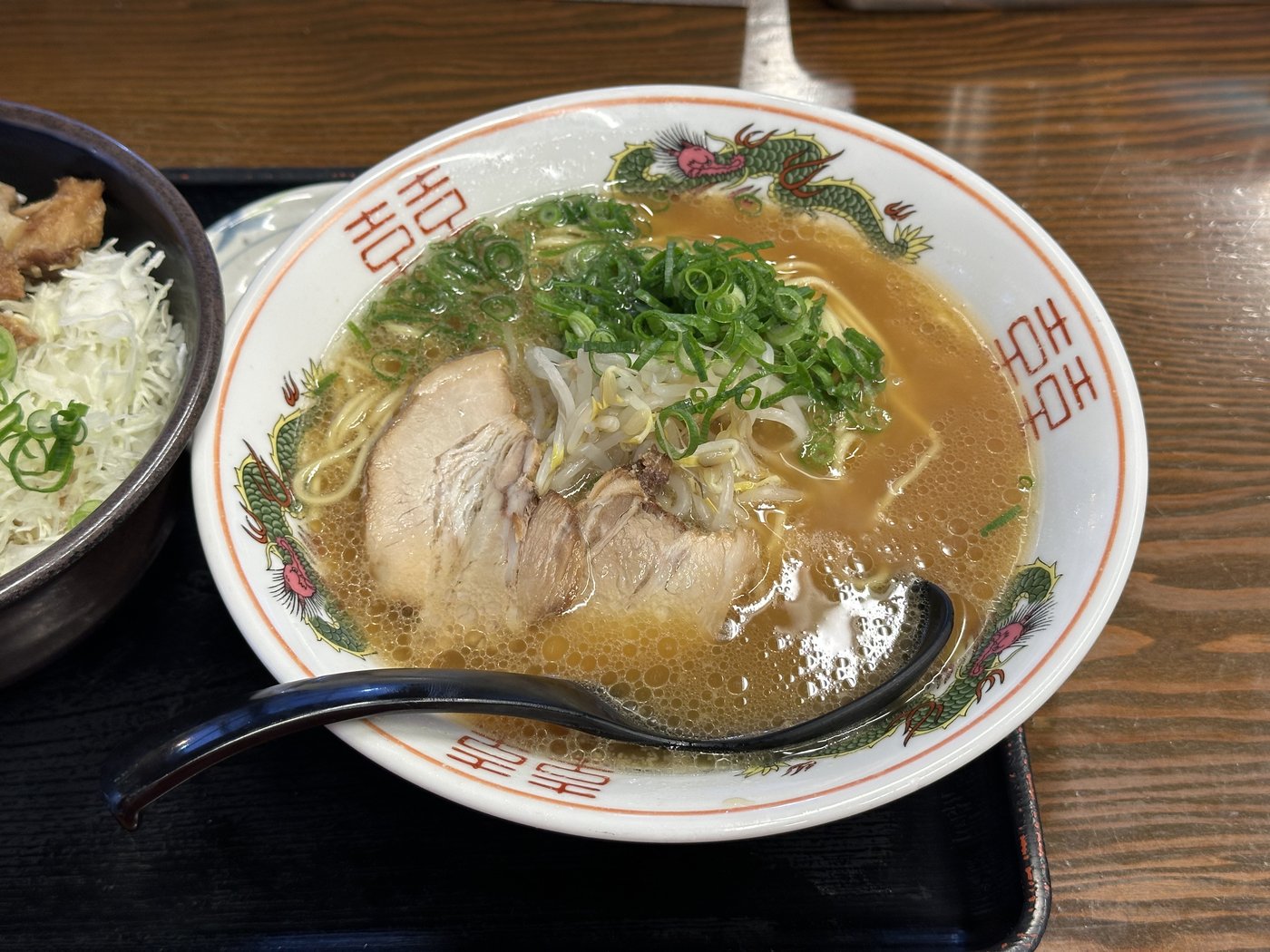
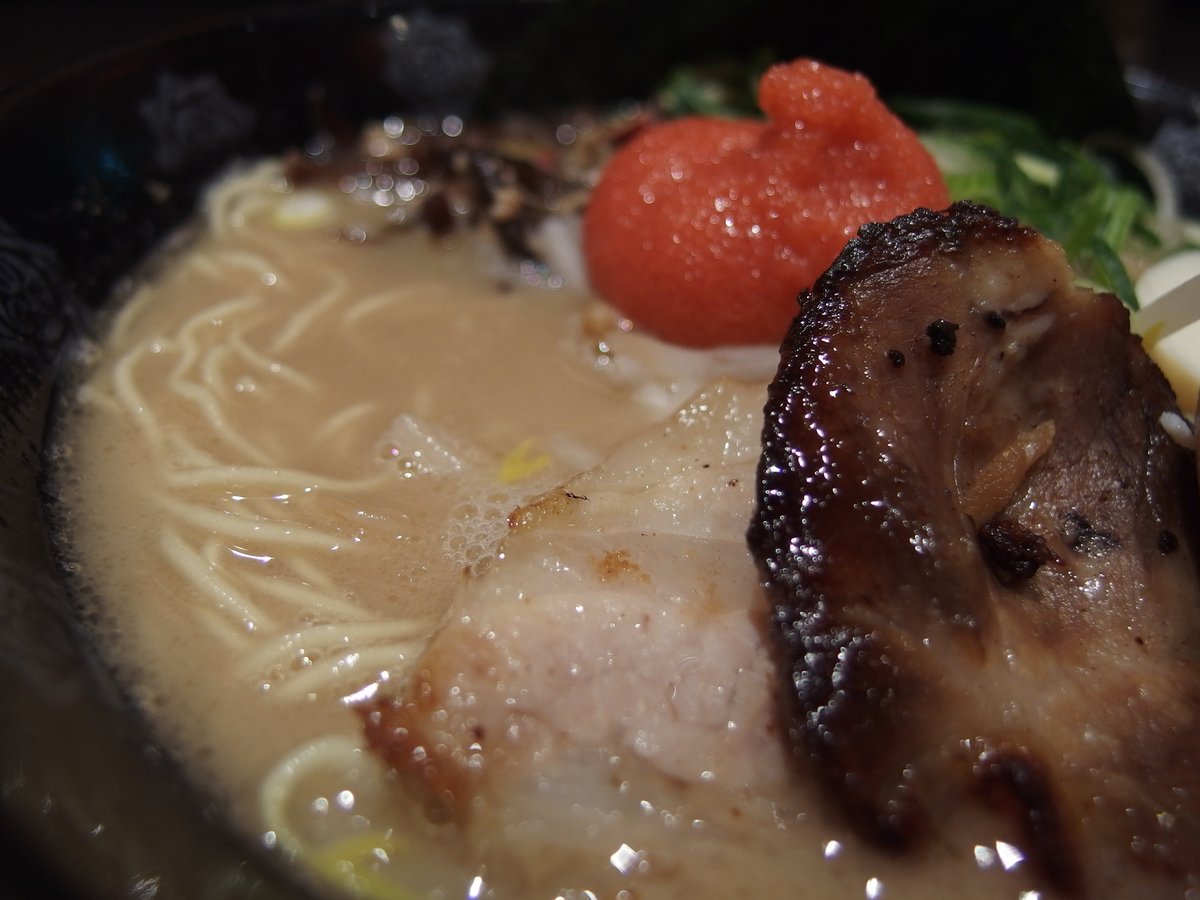
Here's the part worth understanding, because it's what makes Tonchin different from the Ichiran/Ippudo Hakata bowls. Classic Hakata tonkotsu is a milky-white, pork-forward broth. Tonchin took the rich pork-bone base and deepened it with dark soy sauce (tamari), slow-simmering pork, chicken and vegetables together. The result is a broth that's rich but clean and light, with no gamey pork smell — browner and more savoury than Hakata white, easier for a first-timer who finds heavy tonkotsu off-putting.
The noodles are part of the act too: hand-kneaded, medium-thick and wavy (or straight — your choice), with bonito-fish powder kneaded into the dough so the wheat and the soup blend smoothly. It's a thoughtful, distinctly Tokyo take on a southern dish.
What to order — and the free-size deal
The menu has grown over the years, but the heart of it is simple:
- Tokyo Tonkotsu Ramen (東京豚骨ラーメン) — order this first. The bowl that started it all: the dark-soy pork-bone broth, wavy noodles, and Tonchin's signature three-layer pork belly char siu, plus menma (bamboo) and nori. Around ¥880.
- The "special" (得入り / toku-iri). The same bowl loaded with extra char siu and a soft egg, around ¥1,270. Get this if you're hungry and want the full plate.
- Gyoton (魚豚) — fish-and-pork. The tonkotsu base with a bonito-oil seafood lift, around ¥910. A nice second-visit option.
- Miso and tsukemen. A house-made miso bowl (~¥980) and dipping-noodle (tsukemen) versions round out the menu.
How ordering works
- Order at the counter (some branches use a ticket machine at the entrance) — pick your bowl, your noodle type, and the free large size if you want it.
- Counter and table seating. Unlike the tiny line-up shops, Tonchin branches are roomier, so it's fine for two or a small group.
- Paying: cash always works, and many central branches also take cards and IC (Suica/PASMO). (New to IC cards? See our Suica & PASMO guide.)
- Visitor-friendly: it's a mainstream Ikebukuro spot used to all sorts of customers — pointing at the picture menu works fine, and the queue, if any, moves fast.
- Timing: hours vary by branch, but the Ikebukuro flagship runs roughly 11 am to 11 pm. Go a little off-peak and you'll usually walk straight in.
The honest local verdict: is it worth it?
Here's where I earn your trust. Tonchin isn't the bowl people fly to Tokyo to queue for — that reputation belongs to its neighbour. But that's exactly why I send people here.
- Go to Tonchin if you want a genuinely good, genuinely cheap tonkotsu in Ikebukuro without the hour-long line; you're curious what "Tokyo tonkotsu" tastes like versus Hakata; or you're hungry and love the idea of a free noodle upsize. It's the easy, great-value local pick.
- Skip it (for now) if you specifically came for milky Hakata tonkotsu — that's Ichiran or Ippudo — or you want the full pilgrimage-and-queue experience, which is Mutekiya.
My honest framing: in Ikebukuro, Mutekiya is the event and Tonchin is the everyday — and the everyday bowl is the one locals actually eat on a Tuesday. Try both and you'll understand the neighbourhood far better than the average visitor. For a third, very different Ikebukuro bowl, there's now a roadside-style Ramen Shop (Ra-sho) near the station too — or, if you want the city's most intense style, the Jiro-style Ramen Butayama by the West Exit. For more cheap, real meals nearby, our cheap-eats guide is the companion piece.
Practical information
Tonchin (屯ちん)
- Where (Ikebukuro honten / 池袋本店): 2-26-2 Minami-Ikebukuro, Toshima-ku, Tokyo — Route Minami-Ikebukuro Bldg 1F (東京都豊島区南池袋2-26-2 ルート南池袋ビル1F), about a 5-minute walk from the east side of Ikebukuro Station. 📍 Open in Google Maps. Several other branches across Tokyo (and one in New York).
- Hours: vary by branch; the Ikebukuro flagship is roughly 11 am–11 pm. Check the specific branch before a special trip.
- Budget: about ¥880 for the standard bowl, up to ~¥1,300 loaded.
- Payment: cash; many central branches also take cards and IC cards.
- Languages: picture menu; a mainstream, visitor-friendly spot.
- Good to know: free large noodle size, and a straight-or-wavy noodle choice on most bowls.
Two Tonchin branches by Ikebukuro Station
The two handiest are both a short walk from Ikebukuro Station (each name opens in Google Maps):
- Honten / main shop (池袋本店) — 東京都豊島区南池袋2-26-2 1F — about 11 am–11 pm. The original, on the east side.
- West Exit (池袋西口店) — 東京都豊島区西池袋1-27-1 1F — open 24 hours. The one for a late-night or post-drinks bowl.
If you remember only three things
- It invented "Tokyo tonkotsu" — a browner, dark-soy pork-bone broth, lighter and cleaner than Hakata white.
- Order the Tokyo Tonkotsu Ramen (~¥880) and size up free — regular and large noodles cost the same.
- It's Ikebukuro's no-queue value bowl — the everyday answer to Mutekiya's event.
Make the most of your ramen hunt
- A phone with data (eSIM). For finding the nearest branch, checking hours, and reading reviews on the spot, you'll want to be online. A travel eSIM for Japan activates before you land — no airport queue.
- Want a local to lead the way? A small-group Tokyo ramen or food tour takes you past the famous names to the back-street shops most visitors never find.
These are affiliate links: they cost you nothing extra, and a small commission helps keep these guides free.
The local bottom line
Tonchin is famous for a quiet reason: it didn't just open a good shop, it invented a style — the dark-soy "Tokyo tonkotsu" you'll now spot all over the city — and then it stayed honest, cheap and generous about it. In an Ikebukuro obsessed with its line-up shop, Tonchin is the one locals slip into on a normal night. Order the standard bowl, take the free large, pick your noodles, and taste a small piece of Tokyo ramen history for under a thousand yen.
Helped you find a no-queue bowl in Ikebukuro? If these guides are useful, a small tip keeps them coming.
☕ Buy me a coffeeImage credits (representative photos of the style, via Wikimedia Commons, resized): hero by ノボホショコロトソ, CC BY 4.0; bowl by Guilhem Vellut, CC BY 2.0.
Want the nearest branch, or a quieter time to go?
Ask me directly — I reply in public so the next traveller benefits too: